

What is the maintenance procedure for large-diameter high-pressure hoses?
Release date:
2022-09-19
Author:
Warehouses storing high-pressure hoses should be kept clean and well-ventilated. Relative humidity should be maintained below 80%, and the indoor temperature should be kept between –15°C and 40°C. Direct sunlight and exposure to damp rain or snow should be avoided. So, how should large-diameter high-pressure hoses be properly maintained?
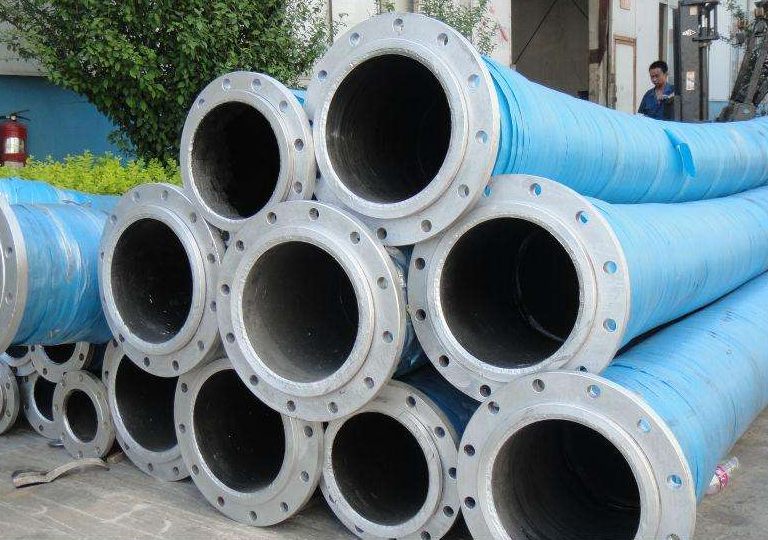
What is the proper maintenance procedure for large-diameter high-pressure hoses?
Warehouses storing high-pressure hoses should be kept clean and well-ventilated. Relative humidity should be maintained below 80%, and the indoor temperature should be kept between –15°C and 40°C. Direct sunlight and exposure to damp rain or snow should be avoided. So, how should large-diameter high-pressure hoses be properly maintained?
What is the proper maintenance procedure for large-diameter high-pressure hoses?
1. When storing high-pressure hoses, they should be stored separately by type and specification. Do not mix or stack them, and clearly label each storage location for easy retrieval.
2. High-pressure hoses should be stored in as large quantities as possible. Hoses with an inner diameter of less than 76 mm may be dyed (provided that the rolled‑in inner diameter is not less than 15 times the hose’s inner diameter).
3. To prevent the inner tube of high-quality hoses from being crushed or deformed, the stacking height should not exceed 1.5 m. In general, hoses should be regularly turned upside down during storage.
4. When storing high-pressure hoses, avoid contact with acids, alkalis, oils, organic solvents, or other corrosive liquids and gases, and keep them at least 1 meter away from heat sources.
5. When storing hoses, do not place heavy objects on them to prevent external compression and damage.
6. The typical storage period for high-pressure hoses should not exceed two years. Precautions should be taken in advance to prevent long-term quality issues.
7. Due to the complexity, diverse structures, and varying operating conditions of high-pressure hoses, their service life depends not only on quality but also on proper use and maintenance. Consequently, even with exceptionally high‑quality products, improper handling and inadequate maintenance can significantly compromise both performance and longevity.
What are the future development trends for large-diameter high-pressure hoses?
1. High-pressure hoses are primarily used in the petroleum and coal industries. In the 21st century, China’s offshore oil development strategy focuses on exploiting nearshore and shallow-water oilfields. Consequently, in addition to drill‑string tubing and vibration‑resistant tubing, the petroleum industry also requires subsea pipelines for transporting fluids in shallow waters. China has already mastered the production of the necessary shallow-water subsea pipelines; however, floating or semi‑floating pipelines and deep-water subsea pipelines still rely on imports.
2. With the implementation of China’s marine oil development strategy, the performance requirements for offshore oil‑production tubing will continue to rise. In recent years, the pressure ratings of hydraulic supports in some coal mines have improved; however, certain wire‑braided hoses can no longer meet these enhanced performance demands, necessitating the use of wire‑wrapped tubing. Additionally, during coal‑mine operations, to prevent coal‑dust contamination and enhance production safety, various specialized oil‑field hoses are employed for water injection and grouting in coal seams—such as sealing devices and retractable tubing—for tasks like coal‑seal sealing and oil‑reduction operations. According to reports, manufacturers have already begun producing these products domestically and are seeking to replace comparable imported alternatives through trials in more than a dozen coal mines.
That concludes our overview of how to maintain large‑diameter high‑pressure hoses. We hope this information proves helpful!
Keywords:
Hot News
Contact Us
Mobile phone/WeChat
Email box
Address
East Zone, Jing County Development Zone, Hengshui City, Hebei Province


Hebei Jiuxing Rubber & Plastic Products Co., Ltd.
East Zone, Jing County Development Zone, Hengshui City, Hebei Province
+86-15631895830(WeChat/WhatsApp)

Scan the code to follow